What is a liquid asphalt tank, and why does its count signal plant capacity?
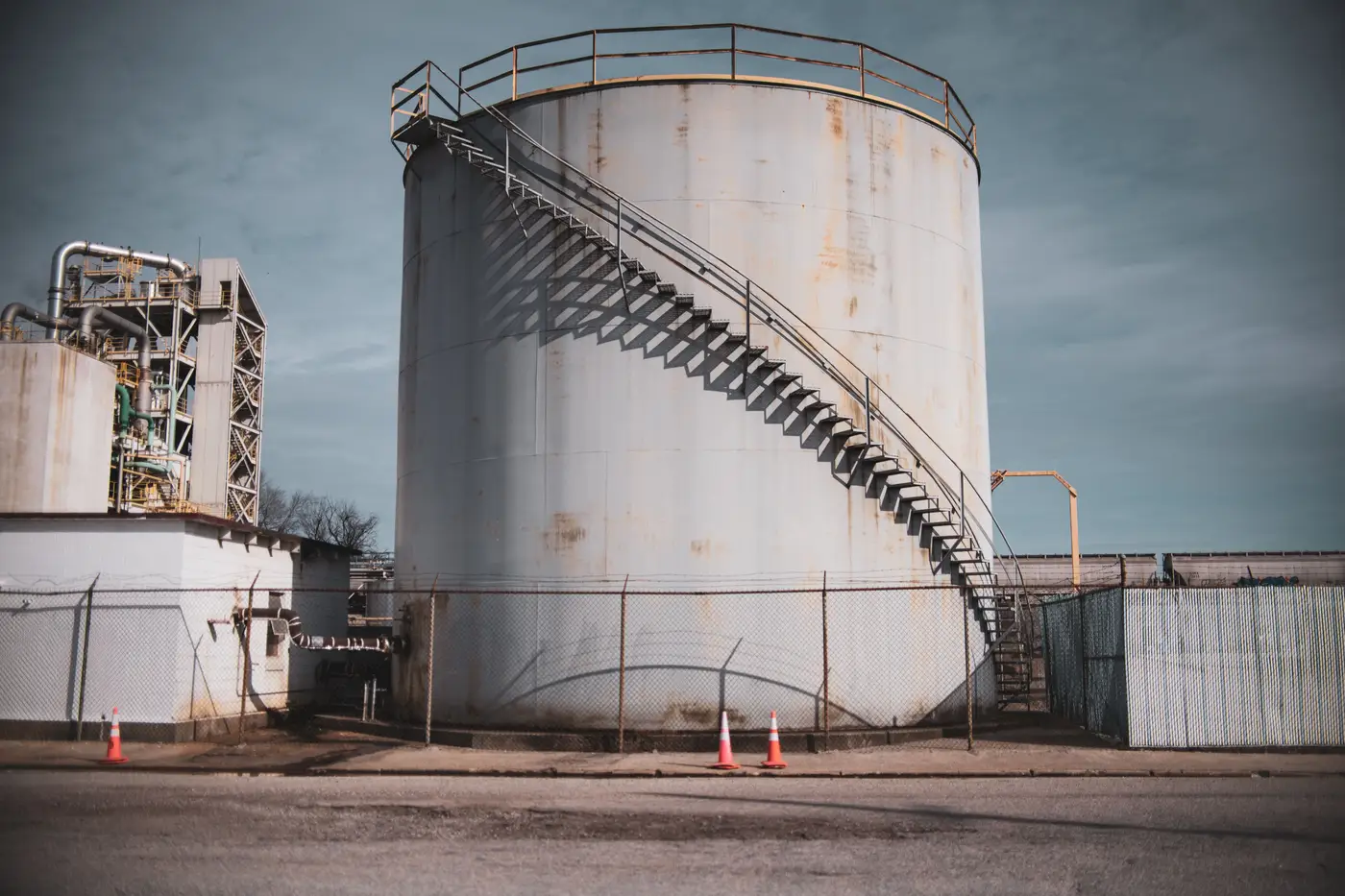
Walk the yard of any batch plant or drum plant and you'll spot the aggregate silos first, tall and obvious. Off to one side, usually closer to the burner and wrapped in insulation with steam or electric heat tracing running up the side, sit the liquid asphalt tanks. Plant crews just call them AC tanks, short for asphalt cement, and they're where the binder lives before it gets metered into the mix.
An AC tank does a different job than an aggregate bin. It's a heated vessel, usually horizontal, holding liquid asphalt cement at a temperature that keeps it pumpable, somewhere in the 300°F range depending on the grade. No heat, no flow. That's why you can spot one from a distance even without climbing the fence line: insulation jacketing, a small stack or vent, and piping that runs straight to the drum or the pugmill.
What the tank count actually tells you
One AC tank on a lot usually means a smaller operation, maybe a seasonal or lower-volume plant running a single binder grade. Two tanks, and you're probably looking at a plant that stocks PG 64-22 and PG 76-22 side by side, or keeps a polymer-modified grade on hand for DOT spec work alongside a standard paving grade. Three or more tanks, especially with varying tank sizes in the cluster, points to a plant running multiple binder grades, blending in-house, or carrying enough buffer volume to support a bigger production schedule without waiting on a tanker delivery mid-shift.
The tanks don't produce tonnage themselves. The drum or batch tower does that. But binder supply is the thing that caps how long a plant can run flat out, and tank count, plus tank size where you can judge it, is the proxy for that cap. A plant with one small tank runs lean and restocks often. A plant with a bank of tanks is built to run long shifts without a binder truck showing up every few hours.
Why this matters more than silo count alone
Silo count tells you how the plant stores finished product or stockpiles aggregate feed. It's a good read on throughput and stockpile turnover. A plant can have generous aggregate silos and still be binder-constrained if the AC tank bank hasn't kept pace. We've seen the reverse too: smaller aggregate footprint, oversized tank farm, a plant clearly set up to run premium or modified mixes at volume even though the yard looks modest from the road.
That gap between silo capacity and tank capacity is exactly the kind of mismatch worth flagging if you're building a territory list of plants due for a capacity upgrade. A plant that added a silo last year but is still running on the same single AC tank it had a decade ago is a different conversation than one that just added its third tank.
Reading it without driving the territory
None of this requires a site visit to count tanks plant by plant. Tank clusters, their footprint, and year-over-year changes to that footprint show up clearly enough in high-resolution imagery, the same imagery that already shows silo and stockpile configuration. Asphalt Plant Mapping tracks that silo, hopper, and stockpile picture across a region once a year, which is the same annual cadence that catches a new tank pad going in or an old single-tank setup finally getting expanded.
If you're building a prospect list and want the tank and silo picture for every plant in a territory instead of calling each one to ask, that's what the mapped plant list on the homepage is built to deliver.
Count the tanks before you count the call list. It'll tell you which plants are actually worth the drive.