What is a cold feed bin, and why it matters for asphalt plant capacity
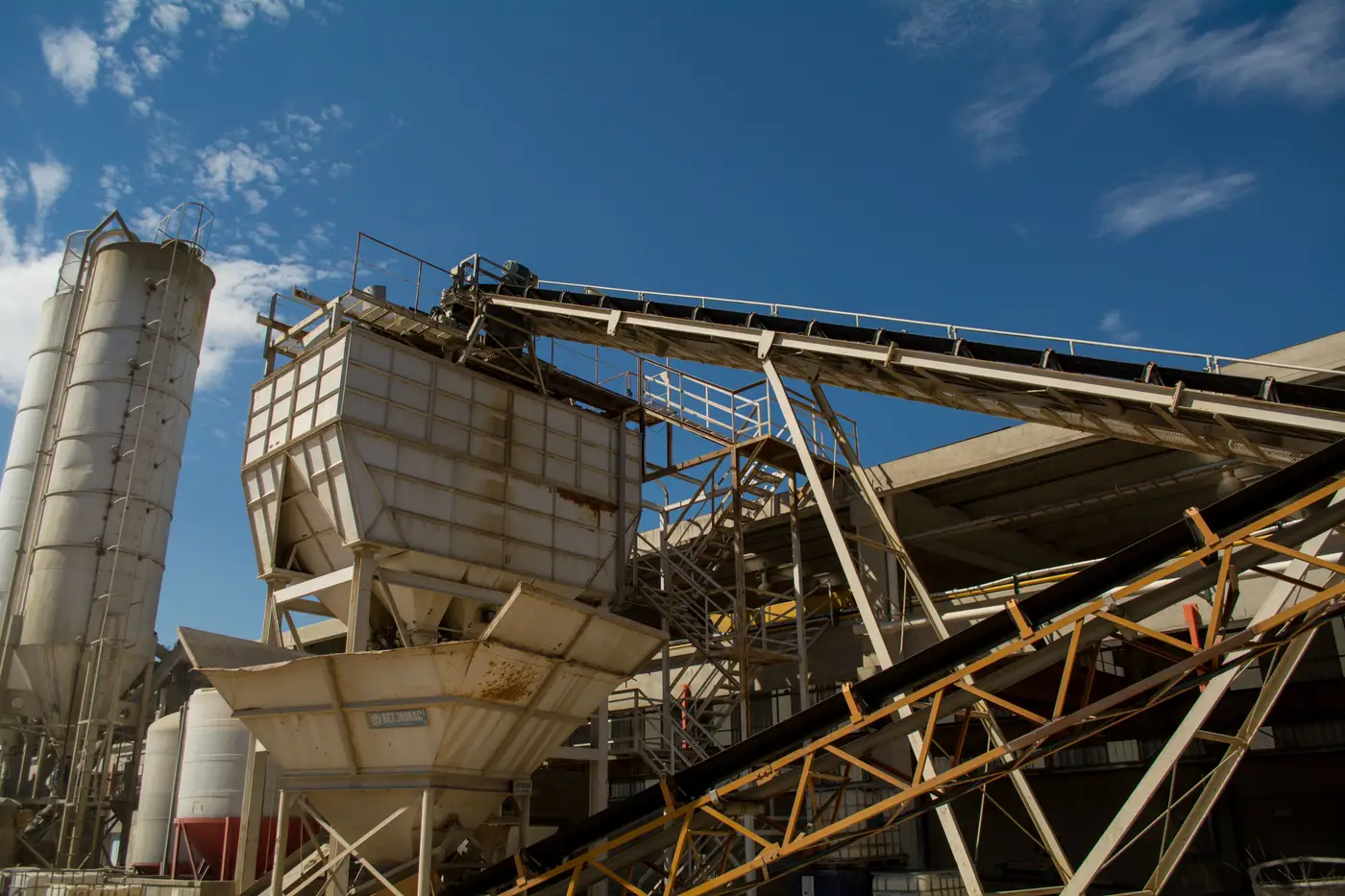
A cold feed bin is the first station in the aggregate feed system: an open-top hopper, usually one of a row of three to six, that holds a single size fraction of raw aggregate and meters it onto a collecting belt at a set rate. Everything downstream, the dryer drum, the hot elevator, the pugmill or drum mixer, is sized to run with that metered feed. If the bins can't keep up, nothing downstream matters.
That's the part people outside plant operations tend to miss. The drum gets the attention because it's the biggest piece of steel on the lot, but the cold feed system is what actually sets the plant's practical throughput ceiling. A plant running four narrow bins at 8 tons each is working a different capacity class than one running six wide bins at 15 tons each, even if the drums look similar from a distance.
Why bin count and size work as a capacity proxy
A plant owner doesn't publish rated tons-per-hour on a sign out front, and most won't take a cold call asking for it either. But the bin row is sitting right there in the yard, visible from the road or from above, and it tells you most of what you need to know without a conversation.
Bin count tells you how many aggregate fractions the plant can blend at once, which maps to mix design flexibility (a plant feeding from four bins is running a simpler gradation than one pulling from six or eight). Bin size and configuration, meaning individual bin width, depth, and whether they're arranged in a straight line or a cluster feeding a single collecting conveyor, tells you roughly how many tons of aggregate the plant can stage and meter per hour before someone has to refill by loader.
Stockpile footprint backs this up. A plant with a small bin row and a tight stockpile yard is capped on both ends: it can't stage much raw material and it can't meter much either. A plant with a large stockpile apron and a correspondingly large bin bank is built to run higher volume for longer stretches without a loader operator babysitting the feed.
Bin configuration and stockpile footprint are both legible in imagery, which is why they work as a desk-level proxy for capacity: the physical shape of the feed system correlates with throughput even without a tons-per-hour number attached to it. No site visit required, and no throughput report to request and wait on.
What a change in configuration tells a BD analyst
This is where it gets useful for territory work. A plant that adds a bin, widens its bin row, or expands its stockpile apron between one year and the next isn't doing that for cosmetic reasons. Bin additions and stockpile expansion are capital projects, and they signal one of a short list of things: the owner is chasing a bigger contract, adding a mix design that needs another fraction staged separately, or replacing an undersized feed system that's been bottlenecking the plant for years.
Any of those is a reason for an OEM's BD team to want eyes on that plant, and to know specifically what got built: a new bin, a wider row, a bigger apron, not just a vague sense that the yard looks different. A plant that's been running the same four-bin row for a decade with no stockpile growth is a different kind of lead than one where the yard clearly got bigger and busier last season. The first might be due for a retrofit conversation. The second already had one, possibly with a competitor.
The catch is that nobody in plant operations is calling an OEM to announce a bin upgrade, and most territory lists are built by someone driving around or working a stale permit database. That's slow, and it misses the plants that didn't need a permit for the work they did.
Asphalt Plant Mapping exists for exactly this gap. It locates plants across a region from imagery, logs silo, hopper, and stockpile configuration once a year, and flags the year-over-year changes once a second pass exists, so a bin expansion or a stockpile buildout shows up as a note on the map instead of something you find out about secondhand after a competitor already closed the deal. If your territory list is more guesswork than ground truth, that's worth a look.