What is a baghouse, and why it caps asphalt plant capacity
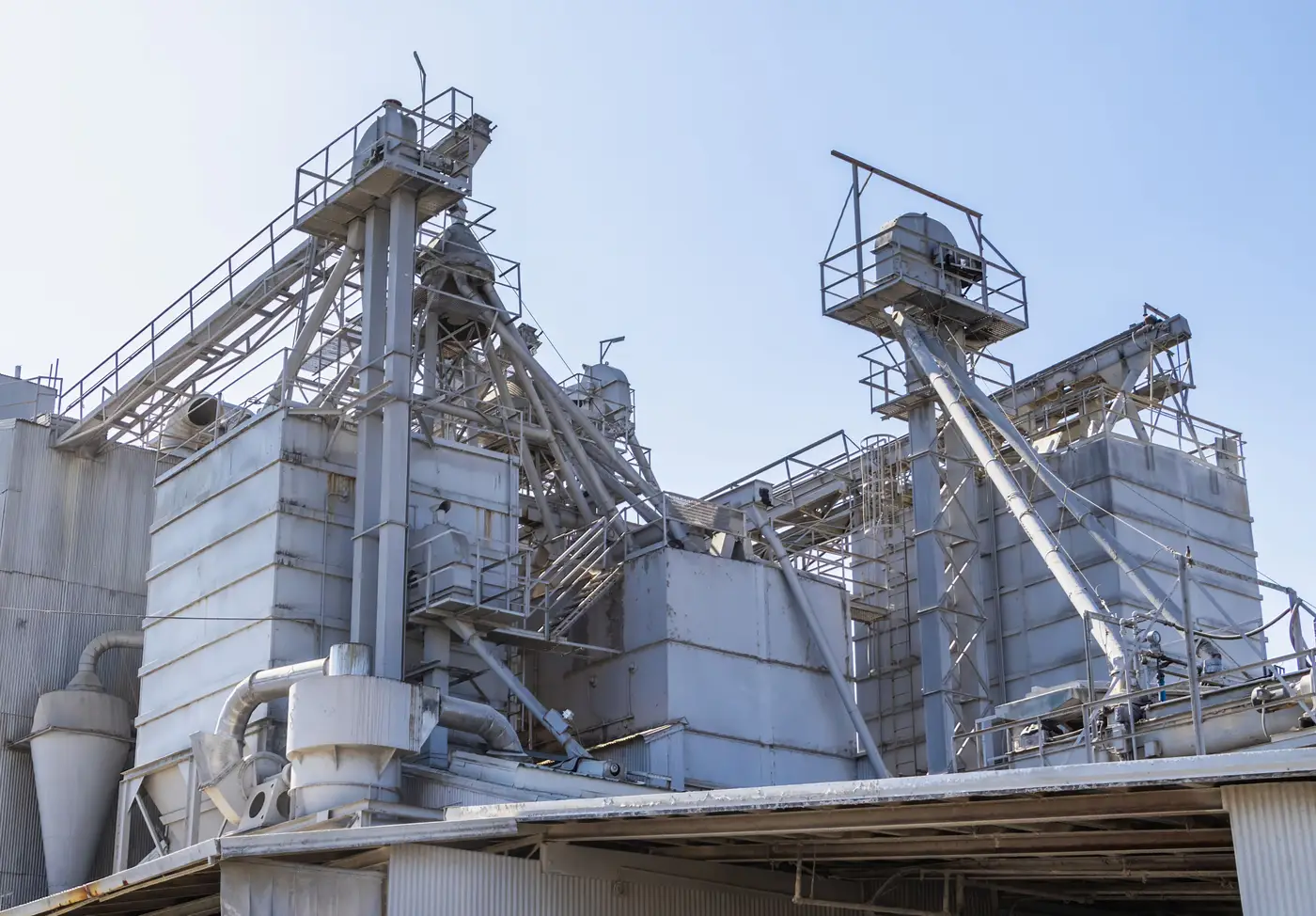
If you've spent any time around a drum plant, you know the baghouse isn't optional equipment. It's the fabric filter system that pulls exhaust gas off the dryer drum, strips the dust out of it before it hits the stack, and hands that collected fines material back to the plant for recycling into the mix. No baghouse, no permit to operate. But the part that matters more for capacity planning is this: the baghouse's airflow rating is often the real ceiling on how many tons per hour a plant can run, not the drum, not the silo bank.
How a baghouse actually works
A baghouse is a bank of filter bags housed in steel compartments, sized to handle a certain volume of airflow, measured in ACFM (actual cubic feet per minute). As hot exhaust and entrained dust come off the dryer, fans pull that air through the baghouse. Dust cakes on the outside of the bags, clean air exits the stack, and a pulse-jet or reverse-air cleaning cycle knocks the cake loose into hoppers below, where it's conveyed back into the process as baghouse fines.
The sizing number that matters is the air-to-cloth ratio: how much air volume moves through each square foot of filter media. Push more air through the same cloth area and you lose efficiency, blind the bags faster, and eventually trip opacity limits on the stack. So every baghouse has a practical airflow ceiling tied to its cloth area and compartment count, and that ceiling is set at the time it's installed, based on the production rate the plant was running then.
Why baghouse sizing caps plant capacity
Here's where it bites a plant owner who wants to run more tons per hour. The dryer drum might have headroom. The silo bank might have room to add a tower or go taller. But if the baghouse was sized for 250 tons an hour and the dryer's exhaust volume at a higher burn rate exceeds what that cloth area can handle, the plant hits a wall. You either throttle production back down to stay under the air-to-cloth limit, or you add a module, go to a bigger baghouse, or rebuild the exhaust train. None of those are weekend jobs.
This is the piece that rarely gets talked about outside the plant itself. Silo capacity and stockpile footprint are the visible signs that a plant has grown or is straining against its limits, but a dust collection system capacity bottleneck is usually the quiet reason an owner finally pulls the trigger on an upgrade. A plant that's been running flat-out on tonnage for a few seasons, with a baghouse that was never touched since the original install, is a plant that's either about to call its OEM rep or already has.
What this means for territory tracking
Mapping replacement need across a territory from imagery runs into one limit right here: a baghouse is usually a steel box tucked beside the drum, and cloth area or compartment count don't show up in an aerial pass no matter how sharp the image is. But the knock-on effects show up where you can see them. A plant that upsizes its baghouse to push more tonnage almost always needs somewhere to put that extra output, which means added silo capacity or a bigger stockpile footprint to match. Those are the signals that show up in a yearly pass over a site and tell you a plant has moved, even when the baghouse upgrade that triggered it never makes it into a trade publication or a press release.
That's the logic behind tracking silo counts and stockpile footprint across a territory from imagery alone: it won't tell you a plant swapped its baghouse last spring, but it will tell you which plants have grown their silo bank or stockpile pad year over year, which is the visible trail that a capacity upgrade, baghouse included, usually leaves behind. Run that across every plant in a territory once a year and you get a short list of who's been investing in capacity, without calling a single scale house to ask.
If you'd rather see that list for your own territory than build it plant by plant, that's what Asphalt Plant Mapping is for.