RAP bin vs virgin aggregate bin: telling them apart in satellite imagery
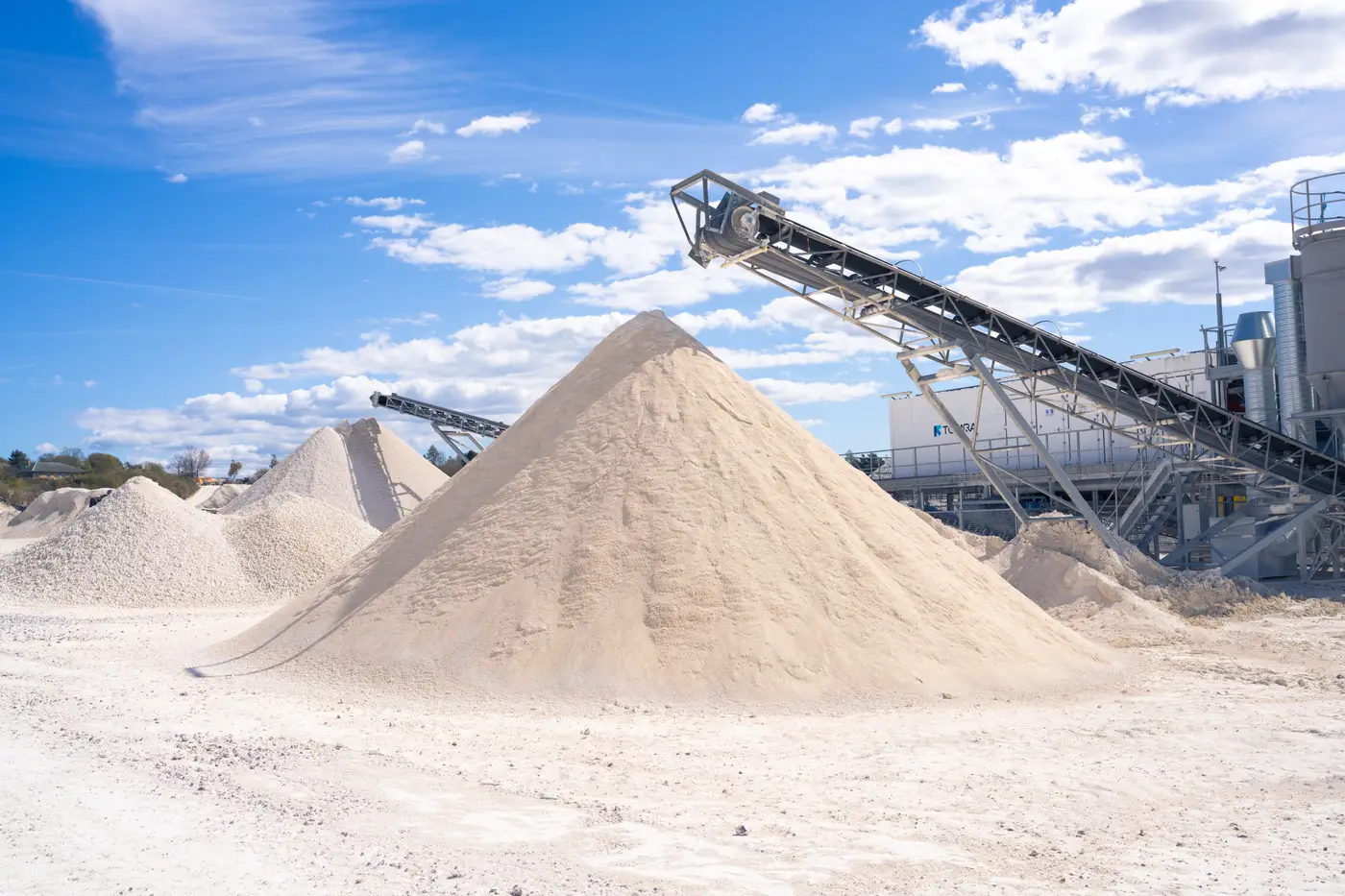
If you've spent any time squinting at overhead imagery trying to figure out which bins at a plant are feeding virgin stone and which are feeding RAP, you already know the plant layout drawings don't match what's on the ground half the time. Plants get retrofitted, bins get added, and nobody updates the site plan. Here's what actually separates them when you're looking at 0.5 m RGB from above.
Color and texture are the fastest tell
Virgin aggregate piles read tan, gray, or buff, depending on the source rock, and they hold a consistent, almost granular texture across the whole pile because the material is sorted by size at the quarry. RAP piles read noticeably darker, often near-black where the asphalt binder coating hasn't weathered, with a duller, patchier texture because crushed reclaimed material varies more in chunk size and surface finish than sorted stone. If you're scanning a stockpile yard and one pile looks like it got rained on with motor oil compared to its neighbors, that's your RAP pile. This holds whether the material is in an open stockpile or sitting in an open-top bin.
Shadow and height matter too. RAP stockpiles tend to run lower and flatter than virgin aggregate piles at the same plant, partly because RAP doesn't get stacked as high (it's heavier when wet and handles differently with a loader) and partly because most plants cap how much RAP they're running as a percentage of mix, so the pile just doesn't need to be as big.
Bin count, arrangement, and covers
Cold feed bins, the ones running virgin aggregate into the drum, almost always show up as a straight row of three to six compartments, uncovered, arranged in a line perpendicular to the drum axis. Each compartment typically holds a different gradation, so if you look closely at pile color within the row, you'll often see subtle shifts from bin to bin, coarse stone, fine stone, sand, in that order more often than not.
RAP bins are usually set apart from that row rather than inside it. A lot of plants run RAP through a dedicated bin or a pair of bins off to one side, and a meaningful share of those are roofed or have a tarp/shed structure over them. Moisture control is the reason: RAP that gets wet feeds inconsistently and throws off the mix design, so plants that run higher RAP percentages tend to invest in a cover. If you see a shed roof over a bin that none of the cold feed bins have, that's almost always the RAP bin, not an equipment shelter.
Some plants instead run RAP through a surge bin or a small silo rather than an open bin, especially where they're using a RAP collar feed into the drum (adding RAP partway down the drum rather than at the cold feed end). From directly overhead, a RAP surge bin reads as a squat cylindrical structure, shorter and wider than the tall storage silos, usually positioned closer to the drum than the cold feed row.
Follow the conveyor, not just the bin
When the pile color and the cover aren't conclusive on their own, the conveyor layout usually settles it. Cold feed bins feed a single collecting conveyor that runs in a straight line to the base of the drum. A RAP bin or RAP surge bin typically has its own separate conveyor run, and on plants using collar feed, that conveyor terminates partway up the drum housing instead of at the base, which is a visible kink in the belt line that doesn't show up on a standard virgin aggregate feed.
This distinction is also the detail that tells you something about retrofit potential. A plant running RAP out of an open, uncovered bin next to a modern cold feed row is a candidate for a RAP storage upgrade long before it's a candidate for a new drum. If you're building out a plant-by-plant capacity read across a territory instead of working plant-by-plant from memory, that bin configuration detail is exactly the kind of thing worth tracking year over year alongside silo count and stockpile footprint.
Next time you're sorting through a plant's bin row, give the RAP bin a second look. It usually tells you more about where that plant is headed than the silos do.