Asphalt plant vs. concrete batch plant: telling them apart from above
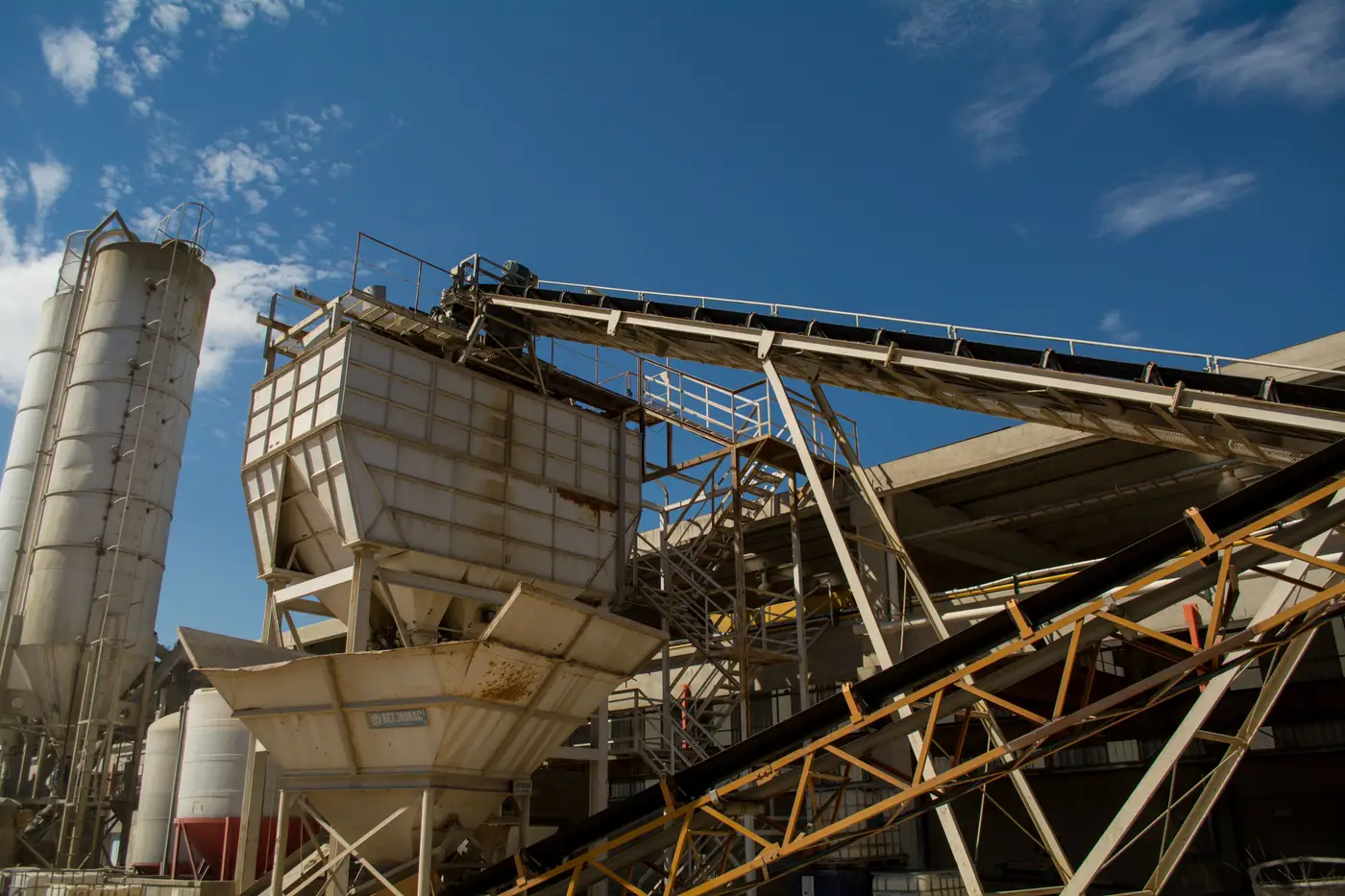
If you're scoping a territory from a desk and working off aerial or satellite frames instead of windshield surveys, mixing up an asphalt plant and a ready-mix concrete plant is an easy way to waste a call. The two site types share a lot at a glance: silos, stockpiles, a truck apron, a scale house near the road. But they're built around completely different processes, and that shows up in the imagery once you know where to look.
The mixer is the giveaway, not the silos
Everyone starts by counting silos, and that's fine as a first pass, but silo count alone will fool you. A ready-mix concrete plant's whole identity is the cement silo cluster: two to six tall, narrow, usually light-colored cylinders standing close together, feeding a central mixer or batcher directly below them. The silos are the plant.
An asphalt (hot-mix) plant tells a different story. Look for a long horizontal drum, set at a slight incline, usually 40 to 150 feet depending on plant size, sitting off to one side with a row of cold-feed aggregate bins lined up at its low end like a conveyor spine. That drum is the rotary mixer where aggregate and liquid asphalt cement get heated and combined. Silos exist at a hot-mix plant too, but they're surge or storage silos positioned near the load-out end of the drum, usually fewer than a concrete plant's cluster, and they're feeding finished mix into trucks rather than feeding raw cement into a batcher.
If you see a cluster of vertical cylinders with no long horizontal drum nearby, you're almost certainly looking at a ready-mix plant. If you see the drum and the cold-feed bin row, you're looking at hot-mix, no matter how many silos sit next to it.
Stockpiles, tanks and trucks confirm it
Once you've got a working guess from the mixer shape, three other details confirm it:
Stockpile layout and staining. Concrete plants keep sand and multiple stone gradations in separate bunkers with dividing walls, usually clean-edged and uniform in color. Asphalt plants stockpile aggregate in open piles that often run darker and less tidy, and the yard apron around the drum and load-out frequently shows dark staining from asphalt cement handling. That staining is one of the more reliable tells in a VHR frame, especially the second or third time you look at a plant across annual passes.
Horizontal storage tanks. Hot-mix plants need somewhere to keep liquid asphalt cement hot and ready, so look for one or more horizontal cylindrical tanks, often insulated, set near the drum. Concrete plants don't have an equivalent structure; their raw material is dry cement in the vertical silos plus water and admixture tanks that are much smaller.
Truck fleet on the apron. This one takes a slightly higher-resolution pull, but if you can make out the trucks, ready-mix plants park rotating-drum mixer trucks in rows near the load-out. Asphalt plants load dump trucks or belly-dump trailers, which sit lower and flatter in the frame with no visible drum.
Why the distinction matters for territory work
For a plant that turns out to be dual-purpose, which does happen on larger sites, you'll usually see both signatures side by side: the vertical silo cluster and the horizontal drum with cold-feed bins, often with separate stockpile areas for each process. That's worth flagging separately rather than forcing it into one category, since the capacity and replacement cycle for the two sides run independently.
Getting the plant type right before you dial in matters more than it sounds. A call about silo replacement timing lands differently at a hot-mix producer sizing drum throughput and surge capacity than it does at a ready-mix operator sizing cement storage, and opening with the wrong frame is the fastest way to burn a first conversation. Asphalt Plant Mapping builds a mapped list of plants across a territory with their current silo and hopper count and stockpile footprint already sorted, so you're not eyeballing drum shapes one satellite tile at a time.
If sorting hot-mix from ready-mix across a whole territory by hand is eating your week, see what a mapped, type-sorted plant list looks like for your area.