Continuous mix vs. batch mix asphalt plants: how to tell them apart in overhead imagery
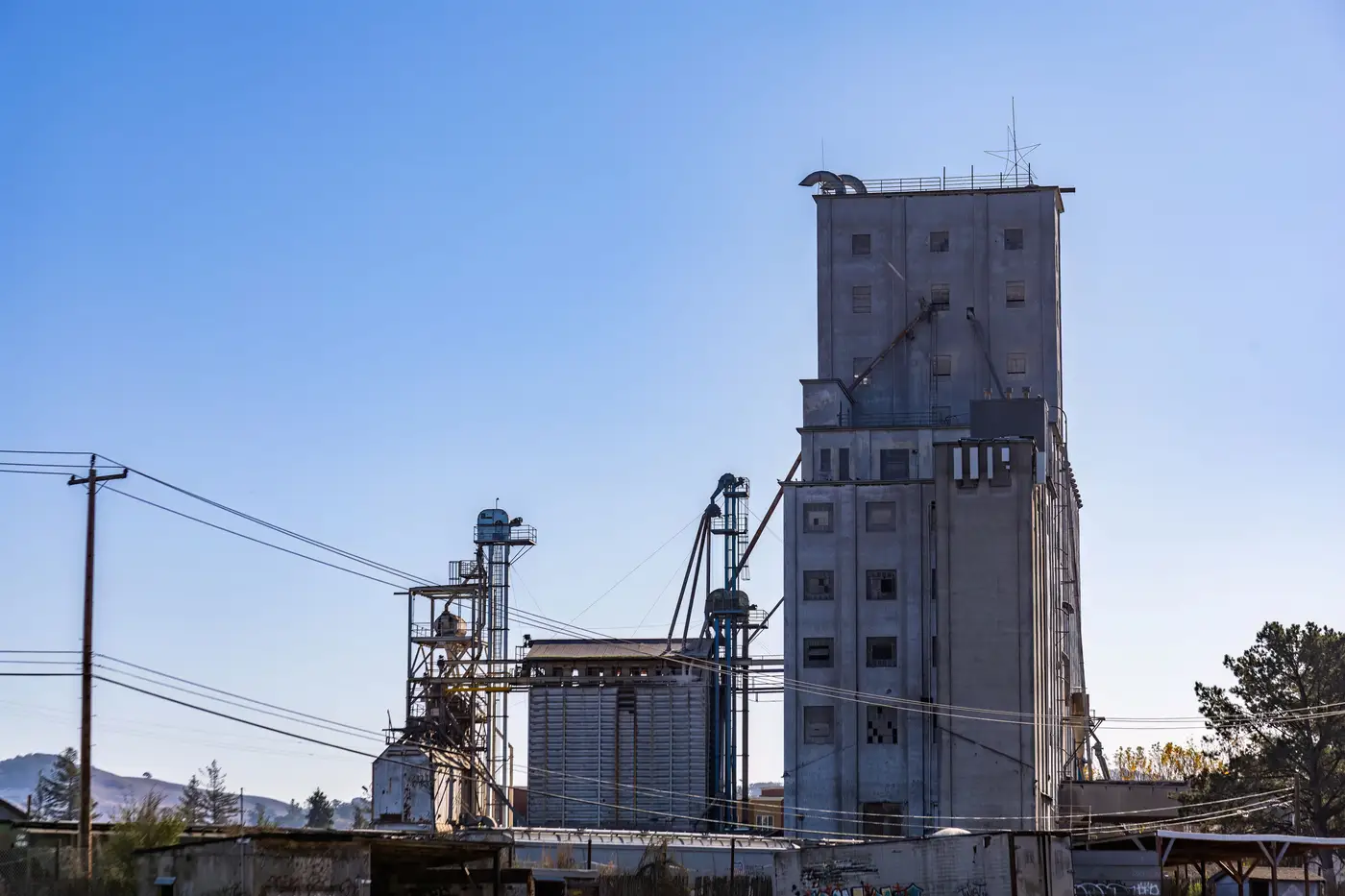
If you're scanning a territory from overhead imagery trying to figure out which plants are batch and which are continuous mix, the giveaway isn't the asphalt itself. It's the tower. A pugmill sits up high and squat with a cluster of hot bins feeding it. A continuous mixer is a long horizontal drum, usually counter-flow, sitting lower and running the length of the structure instead of stacking vertically. Once you've seen the difference on a few known plants, it holds up across a whole region.
Reading the tower
Batch plants build up. The classic silhouette is a tall tower with a pugmill at the top, hot bins stepped below it, and a bucket elevator running up one side to feed the whole stack. From directly overhead you'll see a tight, boxy footprint with a visible elevator leg as a thin shadow line running vertical. Cold feed bins sit off to the side in a row, usually four to six of them, feeding a conveyor that climbs into the tower.
Continuous mix plants, especially drum and counter-flow drum designs, read differently. The mixing happens inside a long rotating drum, so the structure is horizontal rather than vertical. You're looking for an elongated shape low to the ground, often angled slightly, with the cold feed bins feeding directly into one end and the burner housing visible at the other. There's no separate pugmill housing to spot. If the tower silhouette looks squashed sideways instead of stacked up, you're probably looking at continuous mix.
Silo setup backs this up. Batch plants typically run to multiple storage silos, since they're producing in discrete batches that get surged into separate bins by mix type. A plant running three or four silos side by side, varying in height if it's been added onto over the years, usually points to batch. Continuous mix plants more often run off a single surge silo, sometimes two, because the drum is producing a steady stream rather than discrete loads that need sorting by recipe. One large silo next to a long horizontal drum is about as clean a continuous mix signature as you'll get from imagery alone.
Legacy plant tells
Most territory mapping work means figuring out which plants have been running the same iron since the Carter administration. Legacy batch plants tend to show their age in the stockpile layout more than the tower itself. You'll see smaller, tighter stockpile footprints because the yard was laid out before modern production volumes, cold feed bins that look undersized relative to the tower, and often a visible patchwork where a silo was bolted on later and doesn't match the original tower's proportions.
Continuous mix legacy plants show a different pattern. The drum design itself has stayed closer to its original form over the decades, so age shows up more in stockpile sprawl and RAP pile size than in the structure. A big reclaimed asphalt pavement stockpile sitting right next to the cold feed end is a strong signal the plant has been running RAP for a long time, on an older burner and drum built before counter-flow designs could handle today's higher RAP percentages.
Either way, the footprint tells you something the plant operator isn't going to volunteer over the phone: how long the current configuration has been in place, and whether the silo and stockpile layout looks like it's maxed out for the site or has room to expand.
For a BD team covering a multi-state territory, pulling these tells plant by plant from a browser is slow going. Asphalt Plant Mapping locates every plant in a region and logs silo and hopper count plus stockpile footprint once a year, so you've got a standing list of who's running what configuration before you ever pick up the phone.
If you're building a target list for an upcoming territory push, that's worth a look before your reps start dialing.