Batch plant vs. drum plant: what you can actually see from overhead
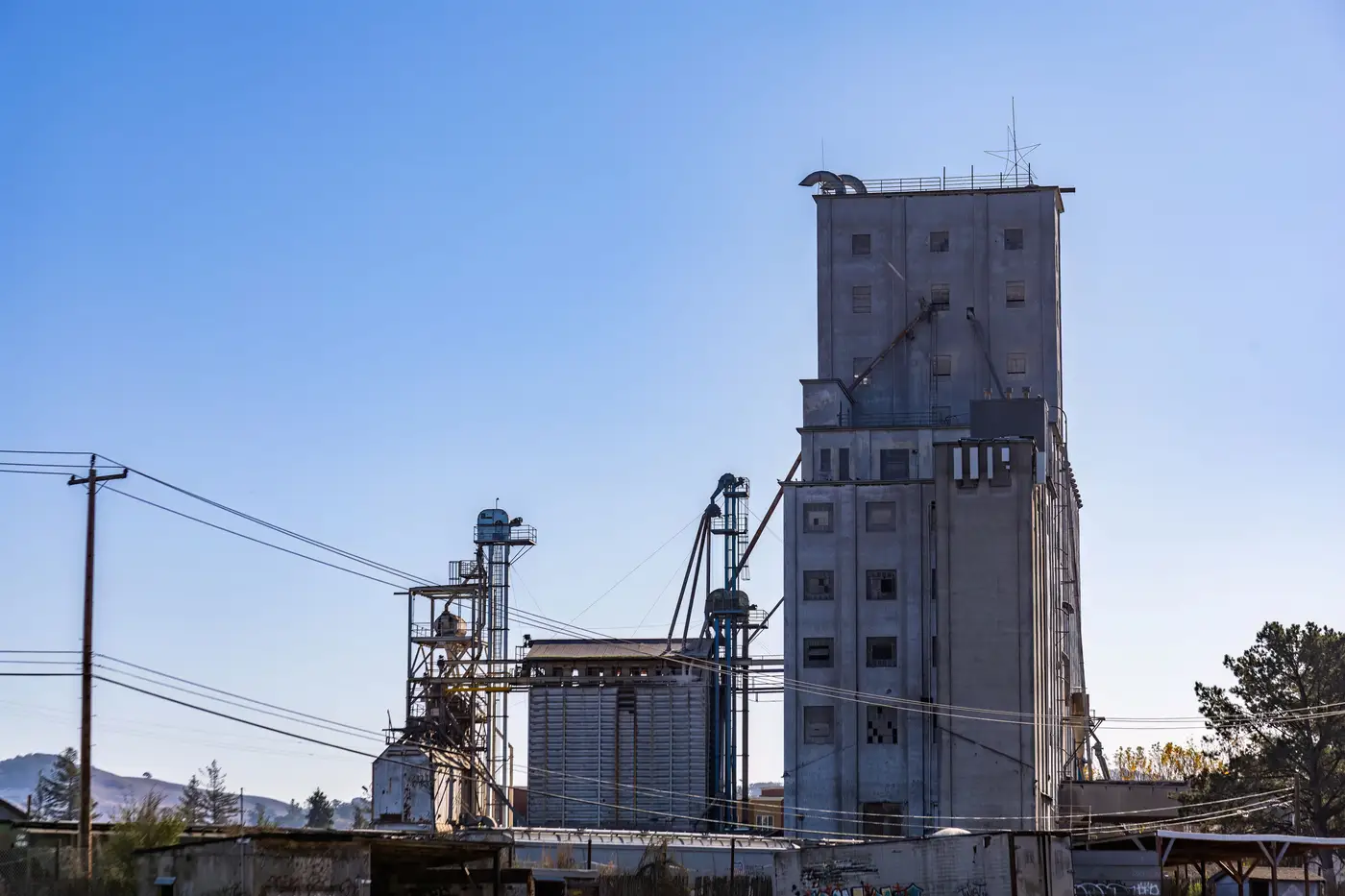
When you're working a territory list with forty or fifty plants on it and no time to call each one, the first thing you need to know isn't capacity, it's type. A batch mix plant and a drum mix plant wear their age and their upgrade cycle differently, and you can't size the opportunity until you know which one you're looking at. The good news is you don't need a site visit. The silhouette gives it away.
The tower is the tell
A batch plant reads from above as a stack, not a tube. You're looking at a vertical tower, usually four to six stories, with the pugmill mixer at the top, hot bins and a vibrating screen deck below it, and a cold feed system running up to it on an incline. In a nadir or slightly oblique image, that tower throws a hard, stepped shadow, boxier than anything else on the yard. Cold feed bins sit off to one side in a row, usually four to six bins, feeding a conveyor that climbs up into the tower. If you can make out an elevator leg or two running parallel to the tower face, that's another batch tell. Trucks load directly under the tower, so you'll often see a truck queue or a loadout apron right at the base.
A drum plant looks completely different because it works completely differently. Instead of batching discrete loads in a pugmill, it mixes aggregate and liquid asphalt continuously as material tumbles through a rotating drum. From overhead that drum reads as a long horizontal cylinder, often 40 to 60 feet, laid flat or slightly inclined, usually painted and banded so it's easy to pick out even at modest resolution. One end has the burner, the other discharges into a conveyor. Because a drum never stops to batch, there's always a baghouse or scrubber unit close by, boxy and low, with ductwork running to it, and you'll almost always see at least one storage silo downstream of the drum, since the plant can't hold material in the mixer the way a batch plant can.
Parallel flow vs. counter flow, and why it matters for RAP
Most drum plants you'll find across a territory are parallel flow, meaning the burner sits at the same end where raw aggregate enters, so the flame and the material travel the same direction through the drum. This is the layout you'll associate with higher reclaimed asphalt pavement (RAP) usage, because parallel flow plants can introduce RAP partway down the drum, away from direct flame contact. If a plant shows a second, smaller feed conveyor entering the drum mid-length, rather than only at the burner end, that's a parallel flow RAP collar, and it's worth noting separately since it tells you something about the age of the mixing system even before you look at the silo count.
Counter flow drum plants exist too, with the burner opposite the feed end, but they're less common and tend to show up as a slightly longer drum with ductwork running the full length back to the baghouse rather than exiting near the feed.
Reading it alongside your capacity check
Once you've sorted a plant into batch or drum, the silo and stockpile count you're already tracking means something sharper. A drum plant with one small silo and a cramped stockpile footprint is working near its ceiling, since it has nowhere to stage extra production. A batch plant with an undersized cold feed row relative to its tower height is usually the older end of a territory's fleet, running legacy bins that haven't kept pace with the tower's rated throughput. Neither of those read-outs costs you a phone call. If you're already pulling a yearly pass on silo and hopper configuration across a territory, plant type is the context that turns a bin count into a genuine replacement signal. Our mapped list of plants is built around exactly that read, so you can tell a tired batch tower from a drum plant that's simply maxed out on storage, before you ever pick up the phone.